

If you’re building a new home in BC, the 2-5-10 home warranty is the minimum warranty insurance coverage that applies to many new homes. It covers specific construction defects for set periods: 2 years (materials and labour), 5 years (building envelope), and 10 years (structural defects), with definitions, limits, and exclusions set by policy and legislation. If you want a clear plan from design to handover, working with a custom home builder like Bali Brothers Construction helps you document decisions and finish details so warranty questions don’t become stress later.
This guide is written for homeowners and buyers in the Lower Mainland who want straight answers: what’s covered, when coverage starts, what’s excluded, and how to make a claim properly. Always read your policy documents for the exact terms that apply to your home.
At A Glance
- 2-5-10 covers qualifying construction defects, not cosmetic preferences
- The 2-year coverage has different time windows for certain items and systems
- The 5-year coverage focuses on unintended water penetration through the building envelope
- The 10-year coverage focuses on load-bearing and structural defects
- For custom detached homes, coverage starts at occupancy or first occupancy permit, whichever comes first
- Coverage stays with the home and can transfer on resale
What Is The 2-5-10 Home Warranty In BC?
In BC, “2-5-10” is a shorthand for home warranty insurance that protects homeowners against certain construction defects for set periods. It is insurance-backed coverage tied to the home, not a vague promise, and it focuses on defects in materials and labour, the building envelope, and structural components.
BC Housing explains that home warranty insurance covers problems with how the home was built, not cosmetic issues, personal preferences, or contractual expectations. That distinction prevents a lot of frustration during the first year of ownership.
Is The 2-5-10 Warranty Mandatory For New Homes?
In practice, most buyers should expect a new home built by a Licensed Residential Builder to have home warranty insurance in place. BC Housing states that all new homes built by a Licensed Residential Builder must have home warranty insurance.
It’s also helpful to remember that “2-5-10” is a minimum standard. BC Housing notes these are the minimum coverage requirements under the Homeowner Protection Act, and some policies may provide additional coverage, so you should always read your policy documents.
Why This Matters For Custom Homeowners
Custom homes come with more decisions: layouts, glazing choices, exterior details, mechanical systems, and finish packages. The warranty matters because it creates a defined framework for qualifying defects, but your experience still depends heavily on build quality and documentation.
A calm warranty experience usually starts before construction begins. When your builder runs an organized process, tracks change decisions, and documents key details, you’re less likely to end up debating “what was included” later.
Quick Coverage Breakdown: What The 2, 5, And 10 Years Cover
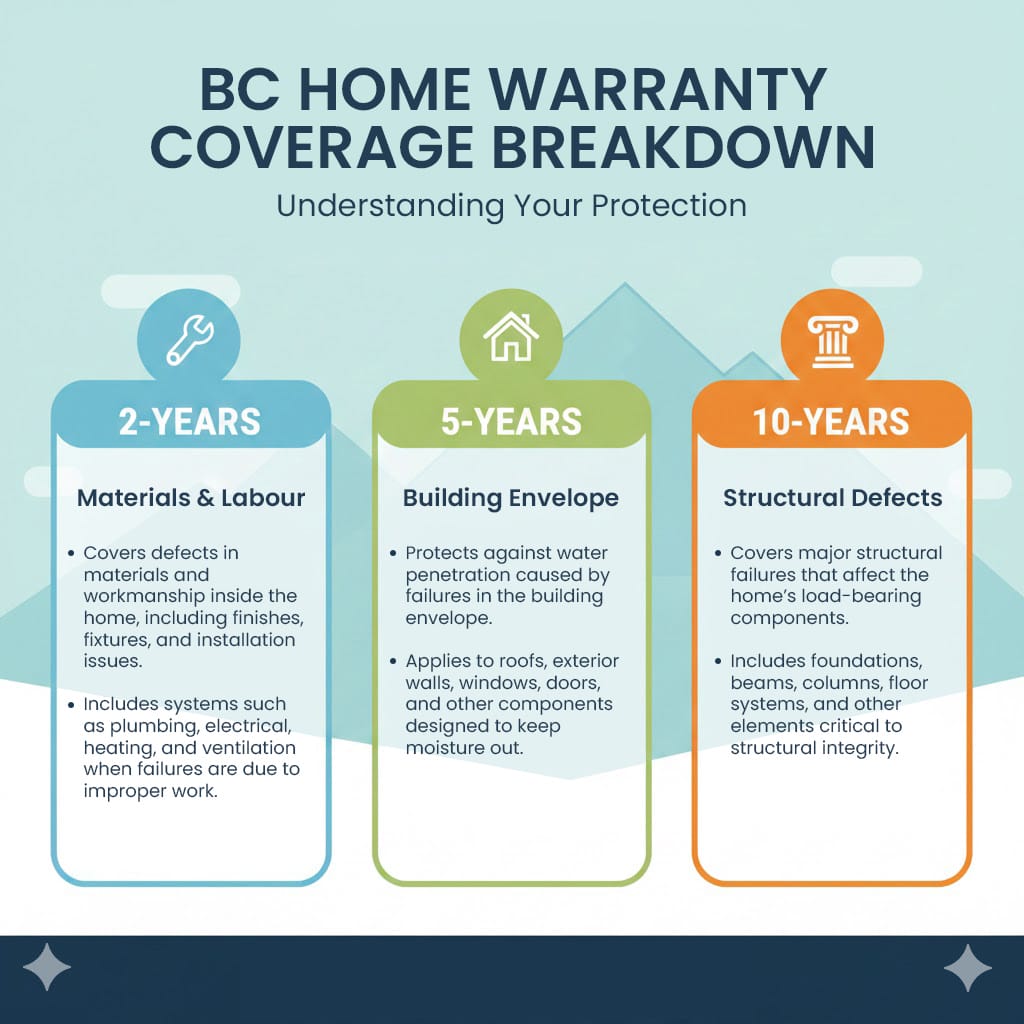
The 2-Year Coverage
The 2-year portion covers defects in materials and labour, but it’s not a single, simple bucket. BC Housing describes a breakdown that includes different time windows, such as 12 months for detached homes (and certain strata components), and 24 months for major systems and specific components like exterior cladding, windows, and doors, plus defects that make the home unfit to live in.
BC Housing also notes that coverage can include Building Code violations if they create a health or safety risk or are likely to cause material damage to the home. In practical terms, the first two years are where you want clean documentation, quick reporting, and a structured deficiency process.
The 5-Year Coverage
The 5-year coverage focuses on the building envelope, including unintended water penetration that could cause damage.
In the Lower Mainland, that’s not a small detail. Wind-driven rain and seasonal storms put a lot of stress on how walls, windows, roofs, and transitions are detailed. Your best protection is a builder who respects sequencing and water management details, plus a homeowner who stays on top of basic maintenance and reporting timelines.
The 10-Year Coverage
The 10-year coverage applies to structural defects. BC Housing describes this as defects in load-bearing parts or the overall structure of the home, including defects that make the home unfit to live in.
This doesn’t mean “anything structural-looking is covered automatically.” The policy terms and definitions matter, and the claim process matters. Still, the 10-year coverage exists to address major structural issues that affect safety and use, which is why builder selection and inspection discipline are so important.
When Coverage Starts And How It Transfers
When Does The 2-5-10 Warranty Start For A Custom Detached Home?
Warranty coverage isn’t “from the day you sign the contract.” BC Housing states that for custom detached homes, coverage begins at occupancy or first occupancy permit, whichever comes first.
That start date matters because it drives your reporting deadlines for each coverage period. If you’re building a custom home, keep your occupancy documentation and record your key anniversary dates (12 months, 24 months, 5 years, 10 years) so you’re not guessing later.
Does The Warranty Transfer If You Sell Your Home?
BC Housing states that coverage stays with the home, not the owner, and if you sell your home, the remaining warranty transfers to the new owner.
If you plan to sell within the 10-year window, treat your warranty documents like closing documents. Keep the policy certificate, claim history (if applicable), and any repair correspondence. It reduces friction for both the buyer and your real estate process.
Custom Vs. Spec Homes
Coverage can begin at different times depending on the type of home. BC Housing distinguishes start timing for speculative detached homes as first occupancy or transfer of title, whichever comes first.
If you’re buying a spec home or presale product, that detail can affect how you think about “how much warranty is left” at the time you take ownership. It’s worth confirming the start trigger early, especially if the home was completed before you bought it.
What The Warranty Covers And What It Does Not
Covered: Construction Defects, Not Cosmetic Preferences
The warranty is meant to address qualifying defects in construction, not finish preferences. Home warranty insurance covers problems with how the home was built, not cosmetic issues, personal preferences, or contractual expectations.
This distinction helps you prioritize what to report formally. If something is purely aesthetic, it may still be worth discussing with your builder during deficiency walk-throughs, but it may not be a warranty insurance claim item. Clear expectations at handover make the first year feel far more organized.
Common Exclusions To Understand Before You Need Them
Every policy has exclusions. The Homeowner Protection Act Regulation allows insurers to exclude certain items, and it lists examples of general exclusions like landscaping, non-residential detached structures, roads/curbs/lanes (with a note that driveways are covered), and site grading and surface drainage.
BC Housing also lists defect-related exclusions that can include normal wear and tear, labour/materials/design supplied by the owner, damage caused by others or natural events, and failure of an owner to prevent or minimize damage. This is one reason “acting quickly” matters when the issue involves moisture.
Homeowner Responsibilities That Affect Outcomes
Two homeowner responsibilities show up repeatedly: read your policy and protect your rights with proper reporting. BC Housing describes your warranty policy as a legal contract with the warranty provider and notes it explains what’s covered, when coverage ends, limits on claims, and how to contact the provider.
On the practical side, keep a simple home file: policy documents, occupancy details, photos of issues, dates, and email records. Also take reasonable steps to prevent damage from getting worse when issues arise, especially if water is involved. BC Housing lists “failure of an owner to prevent or minimize damage” as a possible defect-related exclusion, so the actions you take after discovering an issue can matter.
How To Confirm Your Warranty Provider And Coverage Details
Use The New Homes Registry To Verify Coverage
If you’re unsure who your builder of record is or who your warranty provider is, the New Homes Registry can help you discover whether a home has a home warranty insurance policy and whether it was built by a licensed residential builder.
This step is especially useful if you’re buying a recently built home and the paperwork is incomplete, or if you want to confirm details before conditions come off. It’s a simple check that can prevent a lot of uncertainty later.
Confirm The Warranty Provider And Keep Policy Documents
Once you have the provider name, confirm you have the correct documents: the policy certificate, key dates, and contact instructions. If you can’t find the policy, the most direct route is to contact the warranty provider using the provider information tied to the policy.
The policy explains limits, exclusions, and how to contact the provider, and we recommend reading it carefully and seeking legal advice if you are unsure about your rights or coverage. That’s not about being alarmist. It’s about being organized.
Special Cases: Owner-Built Homes And Other Exemptions
Not every home falls under the same rules. BC Housing lists exemptions and special cases, including owner-built homes, where it notes the owner builder is responsible for defects for 10 years after occupancy and buyers must contact the owner builder directly if defects are found.
There are also other special cases, including certain homes on First Nations lands and certain building types (with specific conditions). If you’re buying a home that may be exempt, confirm what applies before you rely on assumptions about warranty coverage.
How To Make A 2-5-10 Warranty Claim Without Added Stress

A calmer claim process starts with doing the steps in the right order. BC Housing’s claims guidance says to review your policy first, then provide written notice of the defect to both your warranty provider and your licensed residential builder, and to act before coverage expires.
A simple homeowner workflow looks like this:
- Document the issue (photos, dates, notes).
- Review your policy for what’s covered, what’s excluded, and key expiry dates.
- Send written notice to both the warranty provider and the builder as early as possible.
- Take reasonable steps to prevent further damage, but avoid repairs that could affect assessment without checking first.
- Follow your provider’s instructions and forms, keep copies of everything, and track timelines.
What To Expect During Investigation And Repair
After you submit a claim, the warranty provider must contact you to review the claim, arrange an inspection if needed, and may request documents or information needed to assess the issue.
If a claim is approved, repairs must be completed in a timely manner, with factors like weather, material availability, and labour affecting timing. If a claim is denied, the provider must give a written decision with reasons and information about dispute resolution options.
Tips That Reduce Disputes
The best way to reduce disputes is to protect your rights early. Repairs offered by a builder without written notice to the warranty provider do not count as a formal claim, and you may lose the ability to claim once coverage expires if the provider was never told.
Also, keep everything in writing, even if the relationship is positive. Clear documentation helps everyone. If you ever need to understand your options beyond the claim decision, you should file your claim in writing with both the warranty provider and the builder before the applicable coverage expires.
Questions To Ask Your Custom Home Builder Before You Sign
Warranty Documentation Questions
Before you commit, ask direct questions that make documentation simple later:
- Who is the warranty provider for my project?
- When will I receive the policy documents and certificate?
- What start date trigger applies to my home type?
You’re not being difficult by asking. You’re building clarity. A builder who has a clean process should be able to answer these without hesitation and show you how warranty documentation fits into handover.
Build Quality And Envelope Risk Questions
In the Lower Mainland, water management details matter. Ask how your builder approaches building envelope sequencing, transition details, and coordination across trades. You don’t need technical jargon. You want to know whether they plan these items early and document them.
Also ask what homeowner maintenance responsibilities look like after handover, and how they will be communicated. Many warranty frustrations come from unclear expectations, not from bad intent.
Process Questions That Protect Your Experience
Custom homes run smoothly when process is visible. Ask:
- How are changes tracked and approved?
- How often will I get updates and photos?
- What does the deficiency and handover process look like?
If you want a sense of the finish quality and project outcomes you’re aiming for, it helps to review real work. You can see our recent projects here.
Build With Clarity From Day One
A warranty should feel like a backstop, not a source of anxiety. The best way to get there is a well-run build: clear scope, documented decisions, and a schedule that stays organized through handover.
Bali Brothers Construction builds custom homes with fixed-price contracts, a detailed build schedule with pre-booked trades, and structured updates through a client portal with progress photos. We also provide 2-5-10 home warranty coverage on new homes through Pacific Home Warranty, so you know what protection is in place from day one. If you’re planning a custom home in the Lower Mainland, book a consultation and we’ll walk through your goals, timeline, and the right next steps.
FAQs
What Does The 2-5-10 Home Warranty Cover In BC?
It covers specific construction defects for set periods: 2-year materials and labour, 5-year building envelope (including unintended water penetration), and 10-year structural defects, subject to policy limits and exclusions.
Is The 2-5-10 Warranty Mandatory For New Homes In BC?
For many new homes built by a Licensed Residential Builder, BC Housing states home warranty insurance is required, and 2-5-10 reflects minimum coverage requirements.
When Does 2-5-10 Warranty Coverage Start For A Custom Home?
BC Housing states that for custom detached homes, coverage begins at occupancy or first occupancy permit, whichever comes first.
Does The 2-5-10 Warranty Transfer When You Sell Your Home?
Yes. BC Housing notes the coverage stays with the home, not the owner, and the remaining warranty transfers to the new owner if you sell.
What Is Not Covered By The 2-5-10 Warranty?
It does not cover cosmetic issues or personal preferences, and policies may exclude items like landscaping and site grading, plus defect-related exclusions like normal wear and tear or damage not minimized by the owner. Always read your policy for the full list.
How Do I Check Who My Warranty Provider Is?
BC Housing’s New Homes Registry guidance notes the Registry can help you discover whether a home has a home warranty insurance policy and whether it was built by a licensed residential builder.
What If My Home Was Owner-Built?
BC Housing notes owner-built homes do not require home warranty insurance, and the owner builder is responsible for defects for 10 years after occupancy; buyers must contact the owner builder directly if defects are found.