
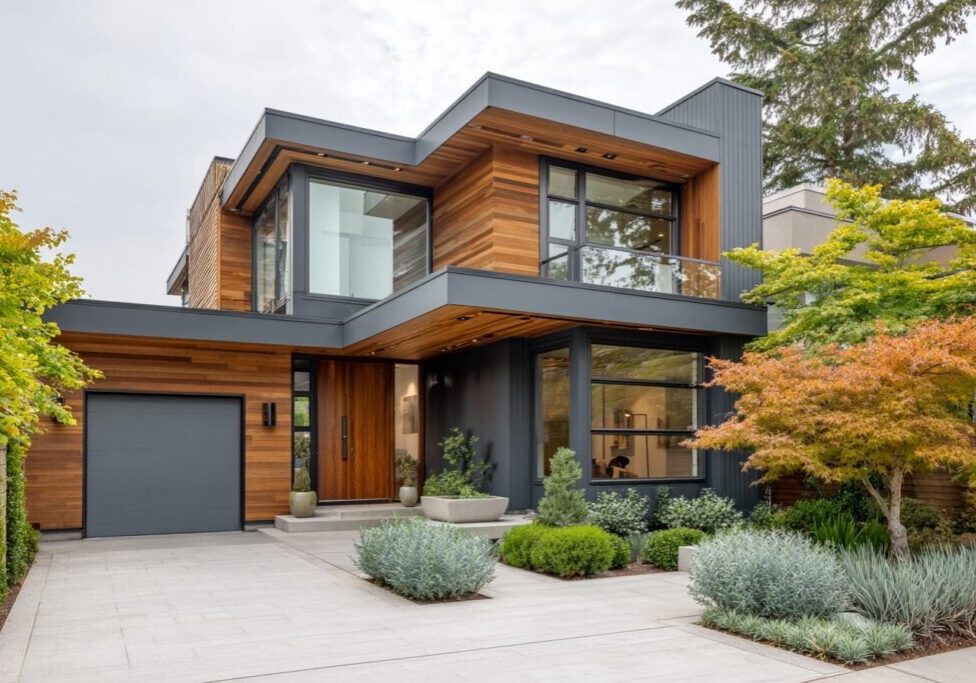
A $2M custom home budget can buy very different outcomes in the Lower Mainland depending on one first question: are you talking about construction only, or a broader project budget excluding land? In real projects, that money usually gets split across the house itself, site work and servicing, soft costs, municipal and regional charges, and contingency or financing, which is why it helps to work backward from scope with an experienced custom home builder instead of relying on a blind square-foot guess.
That layered view is not just builder language. Statistics Canada says contractor pricing reflects materials, labour, equipment, overhead, and profit, but excludes land, land assembly, building design, land development, and real estate fees. Metro Vancouver says Development Cost Charges are one-time fees applied at building permit issuance or subdivision approval, and the City of Vancouver says most new development in the city pays Development Cost Levies based on square footage.
This article treats $2M as a project-planning number, not a fake universal promise. The goal is to show what that budget usually has to absorb, what kind of home it can realistically support under different conditions, and where the money often disappears before the visible house is finished.
First Define What The $2M Covers
Before you ask what $2M buys, you need to define what the $2M is responsible for. That sounds obvious, but it is the biggest reason homeowners end up comparing unlike numbers and getting the wrong idea about what their budget can really deliver.
Construction Budget Vs Total Project Budget
A construction budget is usually talking about the house contract itself: structure, enclosure, interior systems, finishes, and the work required to build the home. A total project budget is wider. It includes the construction contract, but it also has to carry site work, servicing, consultant costs, municipal and regional charges, and the owner-side cost of time.
That distinction matters because official construction-price data does not equal an all-in custom-home budget. Statistics Canada is explicit that the contractor’s price excludes land, land assembly, building design, land development, and real estate fees.
Why $2M Does Not Buy The Same House On Every Lot
Two homeowners can both say, “We have $2M,” and still end up with very different visible houses. One may be building on a clean, serviced lot with straightforward access. The other may be absorbing demolition, tight staging, deeper excavation, retaining needs, or more complicated utility work before the new home even starts to look expensive.
That is why this question is never only about the house. It is also about the site and the approval context. Once you add land-development-related costs, municipal levies, and permit-linked charges, the same headline number can leave very different amounts available for the visible home.
Why Scenario Planning Beats Fake Precision
Without an approved internal benchmark, pretending $2M always buys a specific square footage would be less helpful than showing how the budget behaves under different conditions. The honest answer is scenario-based: the same number stretches differently on a simple lot than it does on a complex site, and it stretches differently again when the finish direction or performance goals change.
That approach is also more consistent with the official sources. The Statistics Canada contractor-price framework excludes several major project layers, while Metro Vancouver and Vancouver both show that development-related charges sit on top of what many homeowners informally think of as the build.
What The Budget Has To Absorb
The table below is the cleanest way to understand what the headline budget usually has to absorb before you attach it to a specific design.
| Budget Bucket | What It Usually Covers | What Makes It Grow | What It Changes About What $2M Buys |
| House Construction | Structure, envelope, interiors, mechanical, electrical, finishes | Form, glazing, millwork, finish level, systems | Changes the visible quality and complexity of the home |
| Site Work And Servicing | Demolition, excavation, drainage, retaining, utility connections, access logistics | Slope, access, soil, existing conditions, urban infill constraints | Pulls money away from the visible house early |
| Soft Costs And Consultants | Design, engineering, surveys, permit documentation, testing | Scope, municipality, consultant needs, revisions | Affects how much budget reaches construction |
| Municipal And Regional Charges | DCLs, DCCs, permit-related charges, city/regional fees | Municipality, floor area, bylaw updates | Reduces what the headline number buys in the house itself |
| Financing And Contingency | Interest carry, lender costs, timing overlap, owner-side contingency | Permit timing, schedule drift, late changes | Changes how much margin the project has |
Each of these buckets behaves differently, and the split between contractor pricing and the broader project costs that sit outside it is exactly what determines how much of the headline number reaches the visible house.
Where The Money Usually Goes In A $2M Custom Home Budget

When homeowners picture a $2M custom home, they usually picture the finished house. That is natural. But the real budget gets distributed before the final kitchen, window package, or staircase ever gets to make an impression.
House Construction
This is the core house: foundation, framing, building envelope, roofing, windows, insulation, drywall, flooring, cabinetry, millwork, plumbing fixtures, electrical, HVAC, paint, and finish work. In most casual conversations, this is what people mean when they talk about a custom-home price.
It is also the bucket most influenced by design ambition. A disciplined form with a strong but controlled finish direction will use this money differently than a home with aggressive glazing, more structural gymnastics, or more bespoke interior detailing.
Site Work And Servicing
Site work is often the first place a headline budget starts to lose visible buying power. Demolition, excavation, drainage, utility connections, retaining, temporary services, site protection, and access logistics do not always show up in the dream images homeowners carry into the project, but they still consume real money.
This is also why urban infill lots can behave so differently from one another. A clean, straightforward lot lets more of the budget reach the house. A tighter or more complicated site can eat through money before the structure feels “underway.”
Soft Costs And Consultants
Soft costs sit outside the visible build, but they are part of what makes the project real. Design, engineering, surveys, permit-ready documentation, consultant coordination, testing, and similar pre-construction work all need to be carried early.
Statistics Canada is useful here because it confirms that contractor pricing excludes building design and land development. That is one of the clearest reasons homeowners should not treat a contractor-style number as the whole budget.
Municipal And Regional Charges
This is where many budgets quietly change character. Metro Vancouver explains that development cost charges are one-time fees applied to new development at the time of building permit issuance or subdivision approval, and Vancouver applies development cost levies to most new development based on square footage. Those are real project costs, not minor admin notes.
Vancouver also publishes a current 2026 schedule of development and building-related fees, but that should be used only as a city example, not a Lower Mainland universal. Fee structures and approvals vary by municipality, which is exactly why regional scenario planning is more honest than quoting one blanket number.
Financing, Carry, Contingency, And Owner-Side Costs
The total project cost is bigger than the contract. Financing carry, lender-related costs, storage or temporary housing overlap, moving friction, and contingency all affect how far the budget really goes.
This is the layer that answers the question homeowners are actually asking: not just “What will the house contract be?” but “What will this project really cost me to live through from start to finish?”
What $2M Actually Buys In Three Realistic Lower Mainland Scenarios

A $2M budget becomes more useful when you stop asking for one perfect outcome and start testing scenarios. The question is not only “How much house?” It is “How much of the $2M gets to stay in the house after the lot, the approvals, the team, and the project realities take their share?”
These scenarios are intentionally qualitative. They are meant to show how the money behaves, not to sell fake precision.
Scenario 1: Straightforward Lot, Disciplined Scope, Money Weighted Toward The House
In the strongest version of this scenario, land is separate, the lot is relatively straightforward, access is manageable, and the project is disciplined about form and finish direction. In that case, more of the $2M can stay in the visible house. The result is often a substantial, well-finished custom home with meaningful quality in the envelope, kitchen, baths, and millwork without forcing every dollar into hidden site friction.
What this budget usually buys here is clarity. You have room for strong construction quality, thoughtful customization, and a finish level that feels genuinely custom rather than purely builder-basic. The money goes further because less of it is disappearing before the house itself gets a chance to benefit.
Scenario 2: Balanced Custom Home With Meaningful Site And Fee Load
This is the scenario many Lower Mainland readers should picture first. The site is not disastrous, but it is not friction-free either. The project still needs to absorb real site work, real consultant coordination, permit documentation, municipal fees, and a reasonable amount of design customization.
In this scenario, $2M can still produce a serious custom home, but it usually demands sharper prioritization. The house can still feel refined and intentional, but the budget is no longer all about visible upgrades. Some of the money is already committed to making the project viable, not just beautiful.
Scenario 3: Design-Forward Or Complex-Lot Home Where More Money Goes Behind The Walls
In this scenario, the site is harder, the structure is more ambitious, or the design is pushing more money into glazing, performance, bespoke detailing, or complex coordination. The home can still be excellent, but the budget feels tighter because more of it disappears into hidden work, deeper customization, and more demanding assemblies.
This is where homeowners often say, “We expected $2M to buy more.” The truth is usually that the money did buy a lot, but not always in the most visible places. It bought the site solution, the infrastructure, the envelope, the complexity, and the approvals that made the design possible.
Why These Scenarios Stay Qualitative
We keep these scenarios qualitative on purpose. Without verified internal benchmarks to publish, pretending $2M always equals a certain square footage or fixed finish level would be less useful than showing how site, charges, and design choices reshape the outcome.
That is consistent with the official sources. Contractor-price data excludes several big project layers, and regional and municipal charges can materially change the amount of money that reaches the visible house.
The Biggest Variables That Change What $2M Buys
Once the basic budget structure is clear, the next question is what changes the result fastest. Some variables are obvious, like size. Others are less obvious, like access, approvals, or how early the performance strategy is solved.
Lot Conditions, Demolition, And Access
Lot conditions are one of the fastest ways to change the visible outcome of the budget. Demolition, excavation, slope, retaining, limited staging room, narrow access, and service-connection complexity all consume money before the house starts to feel luxurious.
This is why a simpler site can make $2M look generous while a difficult site can make the same budget feel surprisingly tight. The money is still working. It is just working on the land first.
Form, Glazing, And Structural Complexity
Shape matters almost as much as size. Large spans, more complicated roof forms, heavier structural moves, double-height spaces, and extensive glazing all change how the budget gets allocated. They can also increase the need for more deliberate detailing and coordination.
So when homeowners ask what $2M buys, the answer depends partly on whether the home is architecturally restrained or architecturally demanding. Both can be beautiful. They just pull money differently.
Finish Level, Kitchens, Baths, And Millwork
Finish level is one of the most visible budget levers. Kitchens, baths, custom millwork, specialty lighting, premium plumbing fixtures, and larger or more custom window and door packages can change the feeling of the house dramatically.
This is also where early clarity matters. A budget usually performs better when the finish direction is intentional early, instead of being carried as vague allowances that grow later.
Energy Step Code, Equipment, And Performance Goals
At this budget level, some of the money may shift “behind the walls” into a better envelope, tighter airtightness, more deliberate ventilation, or different mechanical choices. If performance goals are part of the vision, it helps to understand how BC Energy Step Code shapes a custom home early, because those choices influence what stays visible and what gets invested in the house’s long-term behaviour.
The important point here is not that higher performance is a problem. It is that it is part of what the budget is buying. Once you recognize that, the project decisions become much clearer.
Municipality, Fees, And Approval Path
The municipality affects more than the permit form. It changes fees, levies, regional charges, timelines, and sometimes the pace at which money has to move through the project. Metro Vancouver’s DCC framework and Vancouver’s square-foot-based DCL system are good examples of why local context matters.
That is why a Lower Mainland budget should never assume that one city’s experience is automatically transferable to another. The project should be priced in the context of the actual lot and the actual municipality.
Where Homeowners Usually Underestimate The Budget

Most budget misses are not wild mistakes. They are quieter omissions: the design work, the charges, the carry costs, the friction around timing. Those are the categories that make a project feel like it is “drifting” even when no one decision seems extreme.
Design, Engineering, And Permit-Ready Documentation
Early design and consultant work are easy to underestimate because they do not look like construction yet. But they are still real project costs, and they start consuming the budget long before framing begins.
Statistics Canada’s exclusion language is helpful here again because it confirms that building design and land development are outside the contractor-price framework. If you only carry the build contract mentally, these pre-construction layers can feel like surprise costs later even though they were always part of the job.
DCLs, DCCs, Permit Fees, And City Charges
City and regional charges are another common blind spot. Homeowners often think about finish upgrades long before they think about development levies or regional growth-related charges, but the project still has to absorb them.
Metro Vancouver and Vancouver both make this easy to see at a policy level, and Vancouver’s published 2026 fee schedule is a good reminder that city-level fees are live inputs, not historical footnotes.
Permit Timing And Carrying Costs
Approval timing can quietly change what the budget buys because longer timelines usually mean more carry cost, later procurement decisions, and a more stretched project calendar. Vancouver’s new-house permit page notes that processing times vary based on application complexity, completeness, and current volume, which is exactly why approval speed should be treated as a cost factor, not just a schedule note.
Approval timing affects the whole project, not just the permit date, and the Vancouver building permit timeline for a new house shows how those delays ripple through procurement, financing, and the build calendar.
Financing And Cash-Flow Friction
A $2M budget also behaves differently depending on how it is financed and how the cash flow needs to move. Timing matters. Draw structure matters. Interest carry matters. Even a good budget can feel strained if the financing and project sequencing are not aligned.
Lender timing and project timing start affecting each other in real life, and a construction loan for a custom home in BC works best when the draw structure is matched to the build schedule from the start.
How To Make A $2M Budget Work Harder
A budget works hardest when it is clear what it is protecting. The goal is not to squeeze every cost downward. The goal is to direct the money toward the parts of the project that matter most to the homeowner and avoid losing too much of it to preventable drift.
Decide What Is Fixed Vs Flexible Early
The first move is to decide what must stay and what can flex. Approximate size, room count, general design direction, lot assumptions, and finish priorities are the most important early filters because they shape the whole budget.
This does not mean freezing every detail too soon. It means stabilizing the decisions that move the biggest money first, so the rest of the design has something real to grow from.
Separate Core Scope From Upgrade-Heavy Decisions
A stronger budget separates core scope from upgrade-heavy decisions. Core scope is what the home needs to be built properly. Upgrade-heavy decisions are the elements that can move the number quickly, such as special glazing, elaborate millwork, or more ambitious finish packages.
That separation gives you better control. It turns the project into a series of deliberate trade-offs instead of one long chain of surprises.
Use A Real Budget Framework, Not A Guess
If the headline number is still too abstract, the best next move is to ground it in the bigger framework. The full custom home cost in the Lower Mainland, BC breakdown sets out the complete budget structure behind the shorter $2M scenario lens used on this page.
That broader framework is usually what turns a number into a plan. It gives context for site work, fees, design, contingency, and timing, rather than treating them like side issues.
Keep The Team And Budget Talking To Each Other
Budgets drift most when design, site assumptions, and builder reality stop talking to each other. A well-organized project keeps those conversations active the whole way through pre-construction.
That is part of what makes the process feel stress-free. You are not waiting until the end to find out whether the home and the money still agree with each other.
Step-By-Step: How To Test Whether $2M Fits Your Actual Goal

The most practical use of this page is not the headline. It is the test. If you can pressure-test the budget against the real conditions of your project, you will know much faster whether $2M is the right number or only the starting number.
Step 1: Decide Whether The $2M Includes Land Or Not
This is the first filter because it changes the entire conversation. If land is inside the $2M, say so clearly. If land is separate, say that clearly too.
Blurring those two versions of the budget is the fastest way to compare the wrong projects and get false confidence.
Step 2: Describe The Lot Before You Describe The House
Before you obsess over elevations or finishes, define the lot. Is there demolition? Is access tight? Are utilities straightforward? Is the slope manageable? Does the site feel clean or constrained?
Those answers shape what the budget can buy before the visible house even enters the conversation in a serious way.
Step 3: Set The Finish And Performance Direction Early
You do not need every small selection made on day one. You do need a clear sense of whether the home is leaning toward disciplined custom, more design-forward luxury, or higher-performance assemblies and equipment that move more budget behind the walls.
That one choice can change how far the money reaches without changing the headline number at all.
Step 4: Carry Fees, Charges, And Contingency Before Calling The Budget Done
A budget is not complete once you have a house number. It is complete when the project is carrying the site work, consultant layers, city and regional charges, and a sensible contingency.
This is the step that keeps optimism from turning into frustration later. It makes the number more honest before the project gets emotionally committed to it.
Step 5: Pressure-Test Timing And Financing Before Committing To Drawings
Timing changes budget power. Permit delay, financing structure, and scheduling assumptions all change what the same $2M can actually deliver.
If the project wants to move cleanly, the timing logic should be pressure-tested before the drawings are treated like fixed reality. That is usually where the best early course corrections happen.
Plan A $2M Budget Around The Home You Actually Want
A $2M budget becomes more useful when the scope, site assumptions, and project layers are organized early. That is the real lesson behind every section on this page: the number gets stronger when the planning gets clearer.
Bali Brothers Construction helps homeowners plan custom home construction with fixed-price contracts, a detailed build schedule with pre-booked trades, and structured updates through a client portal with progress photos. That process keeps the budget tied to real scope, real sequencing, and real decision-making, which is how a headline number like $2M turns into a project you can actually enjoy.
If you want to understand what your lot, your goals, and your finish direction would do to a $2M budget, book a consultation and we will help you turn the number into a realistic plan.
Frequently Asked Questions
What Does A $2M Custom Home Budget Usually Include?
It depends on how the number is being defined, but a realistic version usually needs to cover the house itself, site work and servicing, soft costs, municipal and regional charges, and contingency or financing.
Does A $2M Budget Include Land?
Usually, no, unless the proposal clearly says it does. Statistics Canada’s contractor-price framework excludes land, land assembly, building design, land development, and real estate fees, which is one reason the land question should be clarified first.
What Kind Of Home Can $2M Realistically Buy In The Lower Mainland?
It depends on whether the budget is construction-only or a broader project budget excluding land, and on how much the site, fees, and performance decisions consume before the visible house is finished. On a cleaner lot with disciplined scope, the money usually reaches the house more effectively than it does on a more complex site.
Why Can Two Homes With The Same Budget Look So Different?
Because lot conditions, finish level, structural complexity, glazing, performance goals, and municipal requirements all shape how much of the money stays in the visible house versus getting absorbed by site and project layers.
Do DCLs, DCCs, And Permit Fees Really Affect What $2M Buys?
Yes. Metro Vancouver says DCCs are one-time charges applied at building permit issuance or subdivision approval, and Vancouver says most new development in the city pays DCLs based on square footage. Those are real costs that reduce how much of the number reaches the finished home itself.
Should I Carry Financing And Contingency Inside A $2M Budget?
Yes, if you want the budget to reflect the real project rather than just the construction contract. Timing, carry costs, and contingency all affect what the budget can actually deliver.
When Should I Bring A Builder Into A $2M Budget Conversation?
As early as possible, once site assumptions, concept direction, and budget priorities are being defined. Early builder input makes the budget more useful because it connects the number to scope, sequencing, and real project conditions sooner.