
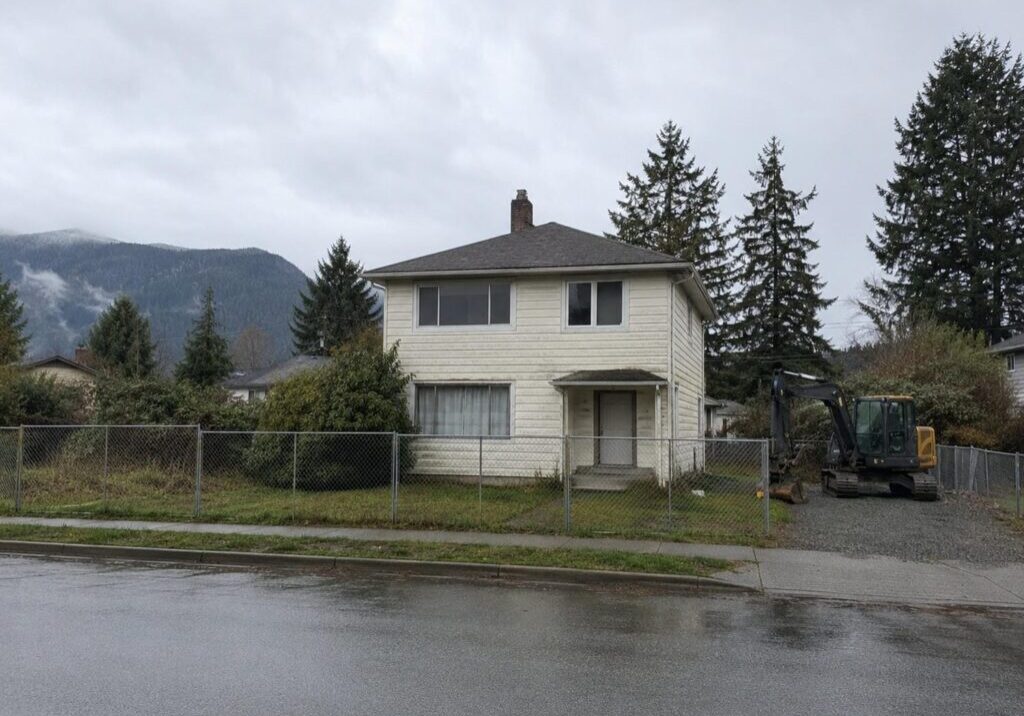
The house on your lot is not the asset. The land is. The house is the thing standing on it, holding the site’s whole history: what was buried beside it, what was added to it, and what the city allowed in the 1950s that it would not allow now. So buying a custom home teardown lot is not a demolition followed by a build. It is one project whose first phase is subtraction, and subtraction is where every unknown on the job lives. That reorders the schedule immediately, because in Vancouver the demolition date is a downstream consequence of the building permit date rather than a date you pick. You have decided to build new, so the question is no longer whether the house comes down. It is the order everything happens in, and what custom home construction actually asks of you before the excavator is booked.
The Year the House Was Built Predicts Most of Your Obligations
One fact about a teardown lot carries more weight than any other, and you can usually find it in ten seconds on a tax notice or a title search. It is the year the house was built. Four separate regimes trigger at four different dates, so a build year tells an experienced builder most of what a project is about to demand.
- Before 1910, or on the Vancouver Heritage Register and before 1950. In Vancouver the house comes apart by hand rather than down in a day, with a wood salvage target attached.
- Before 1950. Salvage and recycling obligations bite hardest. In Vancouver and the District of North Vancouver, this is also the year that triggers their five-figure refundable deposits.
- Before the early 1990s. Assume asbestos until a survey says otherwise, and budget an abatement crew and its own week in the schedule.
- Before the house was converted to gas heat. Assume there may be an oil tank in the ground until somebody has actually looked.
An owner who knows the build year before the offer is firm can price most of this while the price is still negotiable. An owner who finds out afterwards pays for the same work with none of the leverage.
What to Check Before You Close on a Teardown Lot
Everything expensive on a teardown lot is cheap to investigate and expensive to discover. A tank scan before you close costs very little. A tank found under the new foundation footprint after the excavator has started costs a great deal more. Work through this list while you still have conditions.
- The build year. Everything else on this list gets read through it.
- Title, and whether the house is protected. In Vancouver, Council can delay approval of a demolition on a registered heritage building for up to 120 days, which is schedule risk sitting on the property before you negotiate anything.
- Whether anyone has ever checked for a buried oil tank. Confirming it is the owner’s job, and it does not happen automatically at a sale.
- The trees, their trunk diameters and where they stand. A protected tree in the middle of the buildable area is a design constraint, not a landscaping detail.
- What the zoning allows today at that address. It is not what the old house was built under.
- The city’s own sequence, in writing. Ask whether the building permit has to be issued before demolition can begin, because the answer sets your demolition date.
- Whether the lot ever had a commercial or industrial use. That history puts a property into a provincial regime that can hold up the permit itself.
- Your lender and your insurer, before the house comes down. A cleared lot is not the same security as a house, and a vacant house is not the same risk as an occupied one.
Heritage and Character Homes: When the City Has a Say in the Demolition
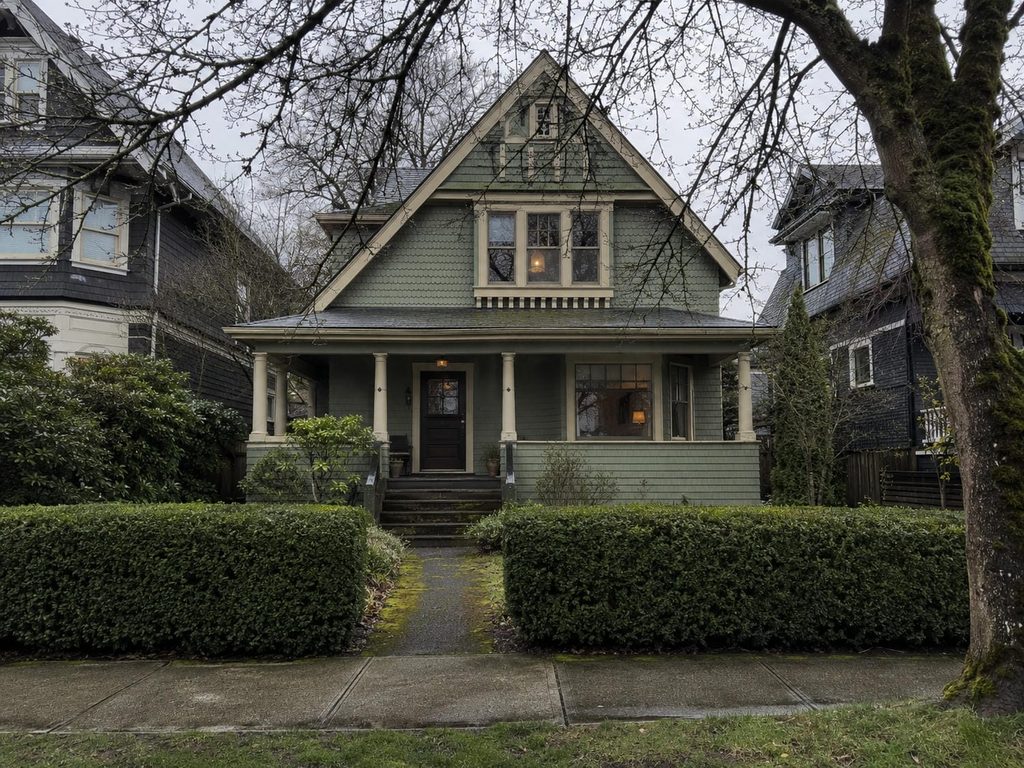
Some houses cannot simply be taken down. You find that out on title and on a municipal register rather than by looking at the building, which is why it is an offer-stage question and not a permit-stage one.
The Vancouver Heritage Register and a Delay of Up to 120 Days
The Vancouver Heritage Register lists roughly 2,300 buildings and structures that Council has formally recognized for their heritage value. Before one of them can come down, every required permit has to be obtained, and Council can delay approval of a demolition for up to 120 days. That is a ceiling on a power the City holds rather than a delay that happens to every listed house. There is also a heritage revitalization agreement, a binding agreement between the city and the owner under which zoning rules can be varied and incentives offered in exchange for conserving the building.
Character Houses and the Pre-1940 Question
Vancouver character houses are typically built before 1940 and meet established criteria, and the City asks owners to apply for a character merit assessment before renovating, redeveloping or demolishing a pre-1940 house. Being pre-1940 does not by itself block a demolition. In the current R1-1 zone an assessment is not needed to work out what new building options or recycling rates apply, only where the owner is pursuing an optional character retention proposal. A house built in 1940 or later can be treated as a character house in special cases, at the Director of Planning’s discretion.
Age Alone Can Trigger a Review Outside Vancouver
New Westminster works differently. Any structure with heritage protection, or simply older than 50 years, goes to the Planning Division for review before the city will even accept a demolition permit application. No listing is required and no one has to have nominated the building. Age alone is the trigger, and the threshold is a municipal choice rather than a provincial rule. So a clean search of the heritage registers is not the end of the question. Ask the city that governs the address what its own review threshold is.
Where the Permit Comes First, It Sets Your Demolition Date
The most common scheduling mistake on a teardown is booking the demolition contractor first. The crew is available, the owner is eager, and then everybody waits on a permit that had to come first anyway. Run the sequence in this order and almost none of that waiting happens.
- Design the new house and apply for the building permit. In Vancouver the demolition application goes in with it.
- Have a qualified person survey the house for asbestos, lead and the rest, then have a licensed crew remove what it finds.
- Have each utility cut its own service: gas, electricity, water and sewer.
- Take the house down, and take the foundation and the retaining walls with it.
- Backfill the hole the basement leaves, straight away.
- File the recycling and salvage paperwork on your city’s deadline, which is 90 days after completion in Burnaby and the District of North Vancouver.
- If there was an oil tank, close out the Vancouver tank permit inside the 90 days the City allows.
In Vancouver, the New House Is Approved Before the Old One Comes Down
In Vancouver you need a demolition permit to take a building down, and the building or development permit has to be in hand before demolition work begins. Where the demolition is part of building a new house, the demolition application is submitted with the new house application. So the demolition date is a consequence of the permit date rather than something you choose, which makes how long a new house permit takes in Vancouver the number your whole teardown schedule hangs off. Surrey does not require that sequence but recommends applying for both at once where you intend to build within 6 months of the demolition date. Everywhere else, get the sequence from your own city in writing before you book a crew.
What Cities Actually Ask For
The application package is the part owners underestimate. Across the Lower Mainland it takes shape as: a survey by a BC Land Surveyor, a recent title search, consent from all owners, photographs of all four sides, a waste disposal and recycling plan, a hazardous materials survey, a rodent abatement declaration from a licensed pest control company, tree protection documentation, erosion and sediment control, and a declaration that the vacant building is secured. No single city asks for all of this. It is the shape of the package across the region, not a checklist for one address.
Coquitlam wants the owner to verify the buildings are free of pests such as rats before the permit is issued, wants a Good Neighbour Development Policy checklist in the package, and requires an assessment by a qualified environmental professional where nesting birds may be present between 1 March and 31 August.
Almost every item is ordered from a third party, so the package is a scheduling problem, not a form-filling one.
What Actually Sets the Date the Lot Is Clear
Surrey publishes a turnaround and issues the demolition permit within a week once all the requirements are met. Vancouver, Richmond, Burnaby, Coquitlam and New Westminster do not publish a processing time, so in those cities the demolition date follows the building permit date rather than a service standard.
The machine work is the short part of clearing a lot. A house that took months to permit comes down in a few days, and what decided the date the lot was actually empty was the survey, the abatement, the severances and the permit queue in front of it. That is why we price and book those four before anyone quotes the demolition itself: the demolition contractor is the last constraint on that list, not the first.
Custom Home Teardown Lot: What Clearing the Site Actually Costs
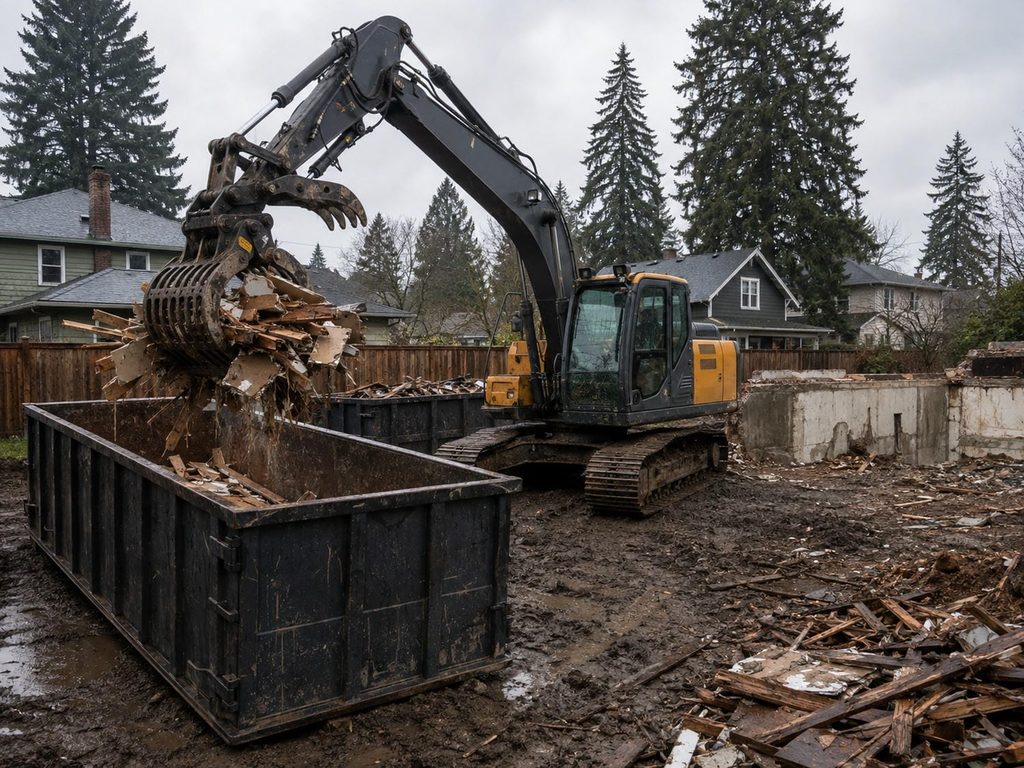
There is no single number for clearing a teardown lot, and anyone who gives you one is quoting a machine rather than a site. What you can do is price the parts, because most of them are published or quotable before you close. Set that total against the wider build budget early, since the money spent on subtraction comes out of the same pot as the house and it lands first, while your financing is least flexible.
The Fees and Deposits Cities Publish
These are published figures you confirm with your city when you apply.
- Vancouver: $1,570 to demolish a single detached house that has provided residential occupancy at any time since 1 November 1986.
- Richmond: $522 to apply, $202 to $404 in inspection fees, and a damage deposit of $1,500, rising where a dike crossing is involved.
- Surrey: a $250 non-refundable administration fee, plus a $2,500 damage deposit where the work is valued over $20,000.
- Burnaby: a $250 demolition waste permit fee.
Add up only what is published and checkable and a pre-1950 Vancouver teardown is already into five figures before a machine arrives: $1,570 for the permit plus the $15,310 green demolition deposit the City of Vancouver collects. The large number in that sum is refundable, so treat it as cash flow rather than cost. The regional development charges on the new house are a separate bill that lands later.
The Line Items That Are Not in the Demolition Quote
Demolition itself is rarely the expensive part of clearing a teardown lot. The money is in what sits around it: the hazardous materials survey and the abatement, the refundable deposits, tree replacement and securities, utility severance charges, disposal tipping, the environmental work, and whatever turns up in the ground. Several are not the demolition contractor’s scope at all. An owner reads one quote and believes it covers the site.
Hold them by how firm they are. The permit fees, the deposits and the tree securities can be priced before an offer goes in, because they are published and they depend on facts you already know: the city, the build year, the floor area and the trunk diameters. The abatement and the disposal firm up when the hazardous materials survey comes back. Only the ground stays genuinely open, and it stays open until the excavator is in it.
One distinction costs owners more than any of the rest. A five-figure salvage deposit is cash flow, not expense, but only where the documentation comes back complete and on time. People lose deposits on paperwork, not on performance.
Salvage and Diversion: Three Cities, Three Measuring Sticks
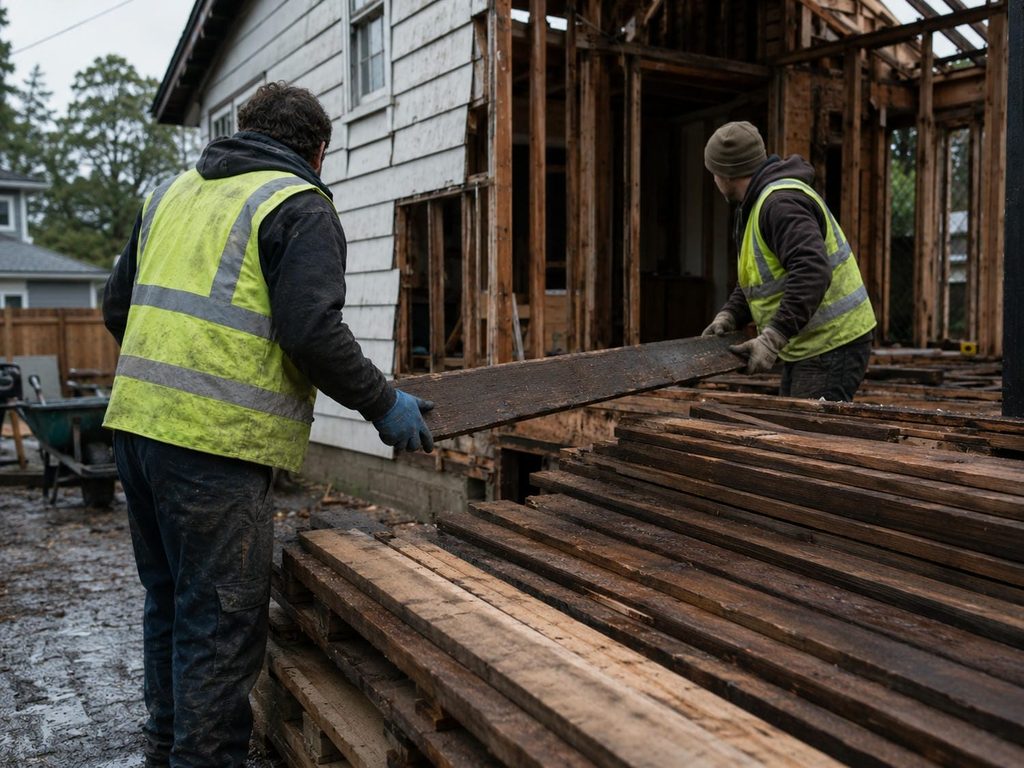
There is no Lower Mainland demolition process. There are a dozen of them, and they differ on the things that cost money. The City of Vancouver measures the obligation as a percentage of the building’s weight: at least 75% of the materials in a pre-1950 house must be reused or recycled, rising to 90% where the City deems it a character house.
Three cities next door to each other, three different ways of measuring the same obligation. The deposit amounts are the ones each city publishes now, and they change from time to time, so confirm the current figure with your city when you apply.
| City | How the requirement is measured | Refundable deposit | What you file to get it back |
| Vancouver | Percentage of materials by weight: 75% for a pre-1950 house, 90% if the city deems it a character house, none required from 1950 on | $15,310 | A recycling and reuse plan with the application, a compliance form at the end, and a wood salvage report for pre-1910 and heritage-listed houses |
| Burnaby | Percentage of demolition waste diverted to an approved facility: minimum 70% | $2.25 per square foot of the building, to a maximum of $50,000 | Compliance documentation within 90 days of completion. Miss 70% and the refund is scaled to the rate you actually achieved |
| District of North Vancouver | Weight of lumber salvaged: 3.5 kg per square foot of finished floor space, for houses built before 1950 | $15,000, confirmed with the District when you apply | A one-page wood salvage plan up front, then the compliance report with original receipts and weigh bills within 90 days |
When You Do Not Get to Choose Demolition Over Deconstruction
Deconstruction means taking the building apart by hand to recover the material rather than knocking it down. In Vancouver you do not get to choose where wood salvage is required, which covers houses built in whole or in part before 1910, and houses on the heritage register built in whole or in part before 1950, at a minimum of 3 metric tonnes of wood salvaged per home for reuse.
Where it is optional, the trade is real. Deconstruction takes longer and costs more per day, and against that sits the deposit you recover and the salvage value of old-growth framing lumber, which is genuinely worth something. Whether a particular house clears the bar depends on how it was framed and how carefully it comes apart, so put that question to the deconstruction contractor before you sign rather than after.
The Same Obligation, Measured a Different Way in the Next City
Cross a municipal boundary and the same obligation is measured another way again. Richmond requires a waste disposal and recycling services plan with the application under its own bylaw, charges a fee based on square footage, and wants original receipts and weigh bills afterwards. Surrey requires a waste disposal and recycling services plan too, including an inventory and the estimated weight of the recyclable material, and holds a $5,000 refundable waste diversion deposit.
Two lots ten minutes apart can face completely different obligations on the same house. So the first question on a teardown is not what demolition costs. It is which city the lot is in.
Richmond Wants the House Offered for Relocation First
Richmond encourages owners to post the house on the City’s house moving and salvage list before applying for a demolition permit, and a listing stays publicly viewable for 60 days so house moving and salvage companies can make contact. An intact house can be somebody else’s building rather than a disposal problem, and somebody may want it. The 60 days is also a schedule input, so it belongs in the plan from the start rather than being discovered partway through it. Owners who find it late skip it, and a house that could have been moved gets crushed instead.
Hazardous Materials: The Rules Name the Owner, Not Just the Contractor
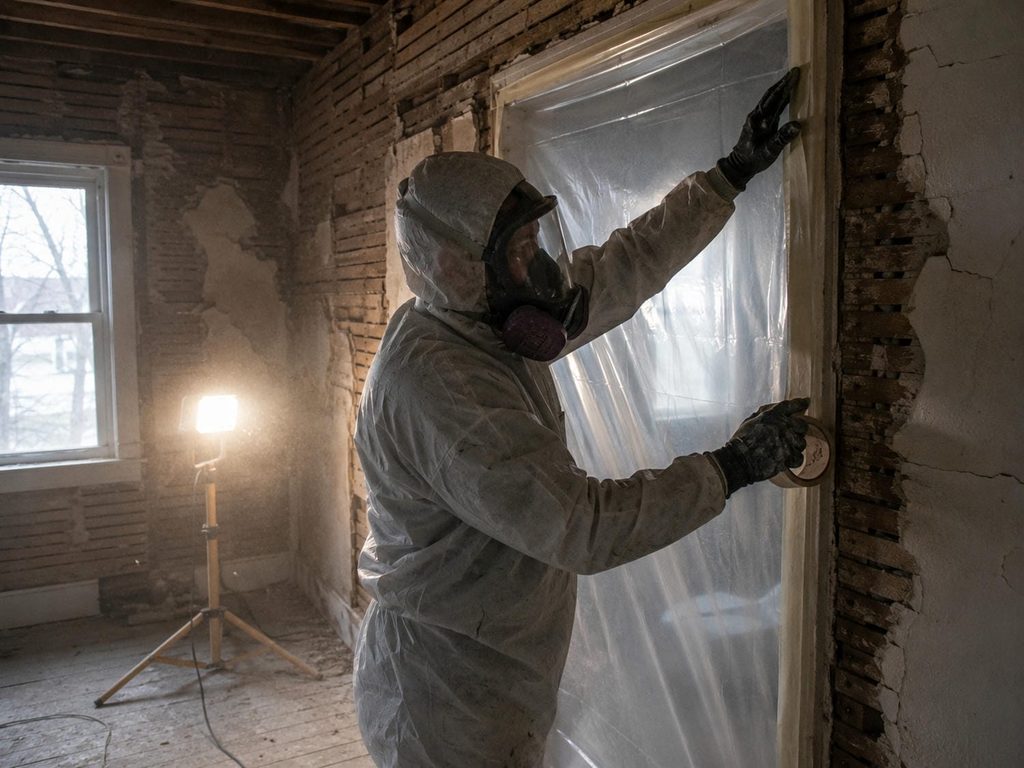
Asbestos was used widely in BC building materials until the early 1990s, and it cannot be identified by sight. So an older house is presumed to contain it until a survey says otherwise, and cities want the report at permit time: Coquitlam requires an asbestos survey for any building built before 1990 as part of its permit review.
What a Hazardous Materials Survey Actually Involves
Before demolition work starts, a qualified person inspects the building and the worksite to identify hazardous materials, including asbestos, lead and other heavy metals, and anything toxic, flammable or explosive that could be disturbed. A written report says what is there and where it is, it stays available at the worksite, and the materials are contained or removed before demolition proceeds. WorkSafeBC puts the duty on every employer responsible for the work and on the owner, so this is not something you can hand over entirely. Lead in old paint and old plumbing turns up on the same survey as the asbestos, so one report and one crew handle both.
Asbestos Abatement Contractors Must Be Licensed in BC
Since 1 January 2024, asbestos abatement contractors must be licensed to operate in British Columbia, and anyone doing asbestos abatement work on buildings must hold certification issued by WorkSafeBC. A public registry of licensed contractors went online in October 2023, so you can check a contractor before they are on your site rather than afterwards. Where asbestos is found, the law requires a qualified abatement contractor to remove it. Abatement happens before demolition, by a separate trade, so it belongs in the schedule as its own week.
The Filing That Has a Clock on It
Written notice of project goes to WorkSafeBC before the work begins, and where the asbestos work on your site is moderate or high risk it is due at least 48 hours ahead. A copy of that notice has to be posted at the worksite before the work starts and stay up for the rest of the project. Surrey tells owners plainly that the survey identifying hazardous materials is submitted by the property owner to WorkSafeBC before demolition begins. So this is a filing with a deadline attached, and a crew that arrives before it has been made cannot start.
Cutting the Services Before the Machines Arrive
Demolition must not proceed until every utility service that could endanger a worker has been disconnected in the manner the utility itself requires. That last phrase is the reason none of this can be handled by the demolition contractor. Each utility owns its own equipment, runs its own request process and keeps its own lead time.
Gas Is the Safety-Critical One
WorkSafeBC has issued a hazard alert about explosions during demolition where natural gas services were not properly disconnected first, endangering workers and the public. FortisBC runs an online service removal request for customers demolishing a building and states that gas service must be disconnected before demolition work begins. It measures its scheduling lead times in weeks rather than days, calls them minimums, notes that builder and developer requests need more time, and says plainly that it is better to submit too early than not early enough. Put the gas removal request in as soon as the demolition is a real date rather than an idea.
BC Hydro Takes the Request From the Owner or Someone They Authorize
BC Hydro crews remove the service and the meter on request at a vacant property, and the request comes from the registered owner or from a business partner the owner has authorized. It does not come from whoever happens to be working on the site. All BC Hydro equipment stays BC Hydro property even where it sits on private land, and it cannot be moved or removed without written permission. Treat it as a call you make early rather than a job for the week before demolition.
Water and Sewer Are the Schedule-Critical Ones
Water and sewer are different from gas and power, because the same connections have to come back for the new house. Richmond requires all services to the site to be properly abandoned and orders the water disconnection through the city’s tax department. New Westminster makes water and sewer disconnection mandatory, requires the building to be vacant while it happens, and puts the cost of cap-off orders on the owner. In the City of North Vancouver the city’s engineering department performs the severance after the applicant pays, and demolition cannot happen until it is done.
Then there is the figure that quietly sets completion dates. In Vancouver, once the site passes its sump inspection and the sewer pipes are capped at the property line, the new connection is automatically scheduled within 4 to 6 months. A new house cannot be finished without it.
The Buried Oil Tank and the Rest of What Is in the Ground
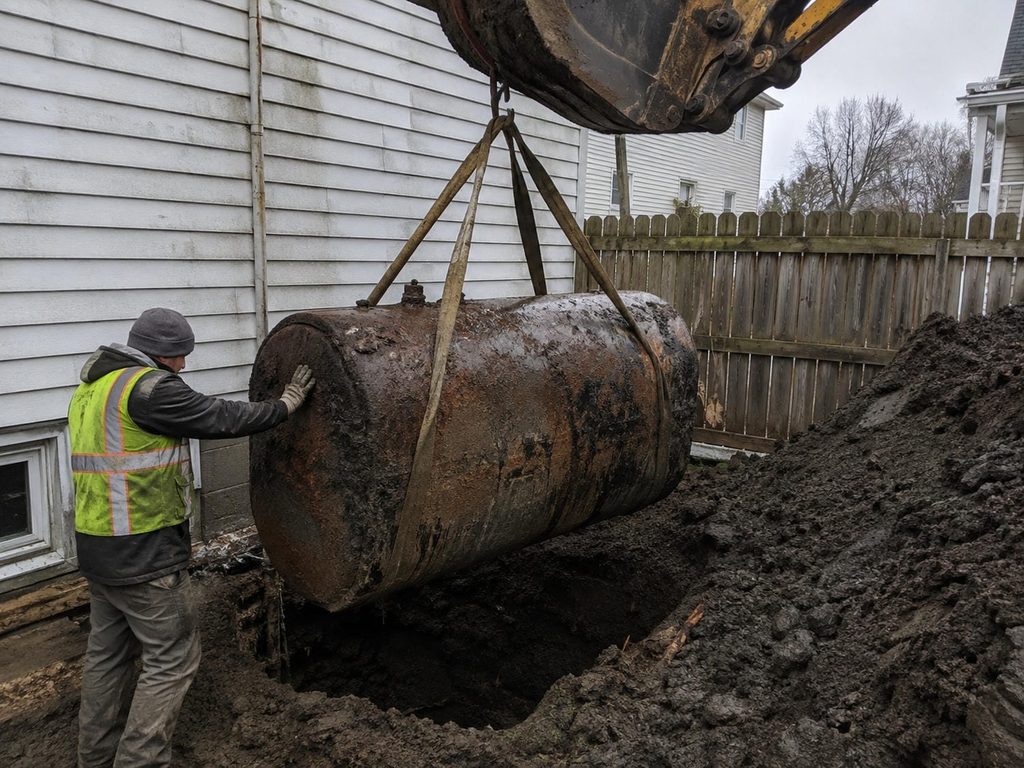
The most expensive surprise in this market on a pre-1970s lot is a buried heating oil tank, and it is the one that is entirely avoidable at the offer stage. A tank found after closing is not bad luck. It is a check somebody declined to make while there was still time to make it.
In Vancouver, Confirming Whether There Is a Tank Is Your Job
In Vancouver, confirming whether there is an underground storage tank is the property owner’s job, and it means hiring a contractor to search the property. Nobody does it for you: not the city, not the seller, and not the inspection that came with the sale. Vancouver also requires that any heating oil tank out of use for two years be removed, and that contaminated soil be taken away and replaced with clean soil. How long a disused tank may sit in the ground is a municipal decision and it varies, with Maple Ridge setting three years, but on a teardown that hardly matters. The tank is coming out either way.
What a Tank Removal Actually Involves
A fire permit from the fire prevention division comes before any work starts. Vancouver requires soil samples from each sidewall and from the base of the excavation on a residential tank removal, analyzed by an approved laboratory for the contaminants of concern. The City recommends retaining a qualified environmental consultant to oversee the removal contractor, and recommends checking that the contractor holds a valid business licence, WorkSafeBC coverage and insurance.
The mechanism that matters most is the clock on the permit. Conditions must be met within 90 days or the permit expires, and a permit left open can affect the issuance of future permits. That is how an old tank quietly blocks a new build.
What Changes If the Tank Leaked
A tank that never leaked is close to a one-day job: dig it up, take the samples, wait for the lab result, close the permit. A tank that leaked is a different project. Soil is excavated and hauled away, testing continues until the results come back clean, and a report is filed at the end of it. That second version is why experienced owners carry a contingency on an older lot instead of hoping.
Where an owner remediates independently, the ministry is notified at the start and at the end, and depending on the site the owner may end up needing a formal determination, an approval in principle, or a certificate of compliance.
If the Lot Ever Had a Commercial or Industrial Use
A lot with a commercial or industrial history sits in a different regime. Where a site has or has had one of the commercial or industrial uses listed in provincial regulation, and the owner applies for zoning, subdivision, or a building or development permit for work that will disturb soil, a site disclosure statement is required. The approving authority reviews it within 15 days and forwards it to the ministry, and it cannot approve the application until the provincial restrictions are lifted by certification or a release notice. That is a permit-blocking mechanism, which is why the lot’s commercial history is an offer-stage question. A residential heating oil tank does not by itself put a lot into this regime.
Once the lot is clear and the contamination question is settled, the next question is what the ground will carry, which is a different investigation with a different engineer.
Trees Are Governed by a Separate Bylaw, and a Tree Permit Can Gate Your Demolition
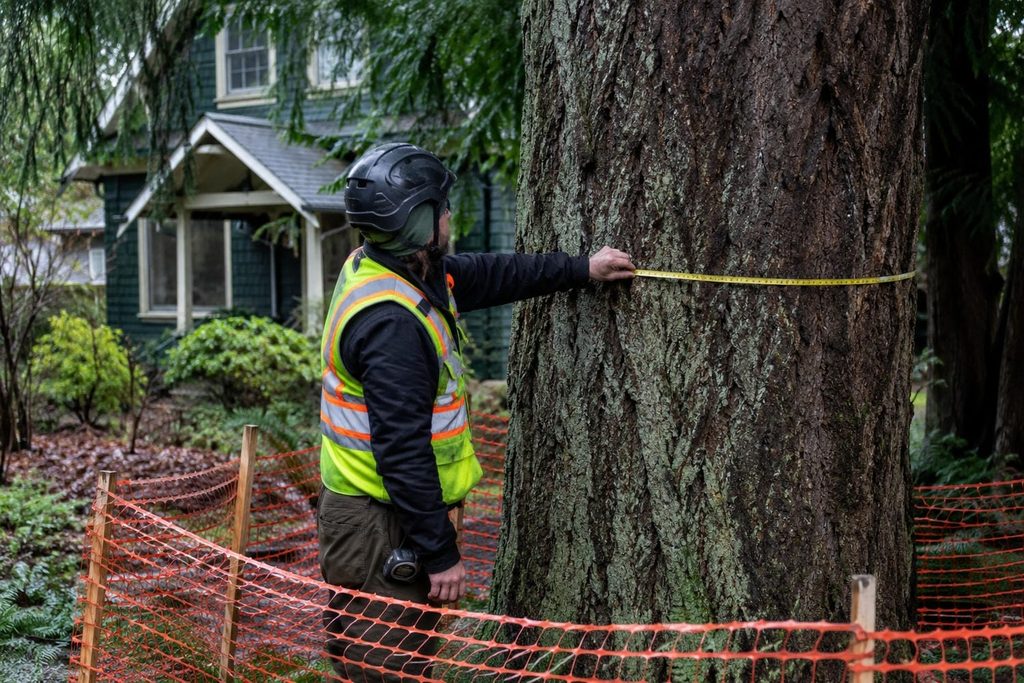
The trees on the lot are governed by a different bylaw from the building. In New Westminster that permit sits in front of the demolition: a tree permit is required with every demolition application and must be issued before the demolition permit is approved. A tree can gate the demolition, not just the landscaping, and removing one first is one of the few construction mistakes with a per-tree fine attached.
In Some Cities, Applying to Build Lowers the Size Threshold
Vancouver and Richmond both require a permit to remove a private tree 20 cm or more in diameter measured 1.4 m above the ground, and an arborist report by a certified arborist is required to apply. Surrey protects trees from 30 cm. Burnaby is where the threshold moves: on a property subject to a development application any tree over 20 cm is protected, while on a property without one the threshold is 30 cm for a conifer and 45 cm for a broadleaf. West Vancouver made the same move in December 2025 for properties undergoing development. In Burnaby and West Vancouver, applying to build changes what you are allowed to cut.
Replacements, Securities and the Price of a Tree You Cannot Replace
Replacement trees are a condition of removal, the number is set case by case, and landscape inspectors come back later to confirm they were planted and are still healthy. That is why the security is not released when the permit closes.
- Surrey: securities at a 2:1 replacement ratio, $550 per replacement tree, and $3,000 per retained tree as protection security, to a $15,000 maximum per single family lot under development.
- Vancouver: $1,000 per tree cash in lieu where a replacement cannot be planted on site.
- Burnaby: a bond of the greater of $800 per property or 120% of the cost of the replacement trees, provided before the permit is issued.
Owners miss this line entirely, and on a treed lot it is not small.
What You Are Allowed to Build on the Cleared Lot
The lot is empty, and the design question is not what the old house was. Two things have moved since it was built, one legal and one recent.
The Old House’s Position Does Not Survive It
An older house is often allowed to sit where it sits only because it was built before the current rules. That permission belongs to the building. Take the building away and the new house is designed to today’s setbacks, today’s height limits and today’s floor area, not to the old footprint. Outside Vancouver, provincial law puts a frame around this: a lawful non-conforming use ends if the use stops for six months, or if more than 75% of the value of the building above its foundation is destroyed, and an existing building whose siting or dimensions do not conform may be maintained or altered only where that does not make the non-conformity worse.
Single-Family Zoning Has Been Opened Up to More Than One Home
The province has required local governments to allow more than one home on lots that used to be single-family or duplex only, through small-scale multi-unit housing such as triplexes, fourplexes, laneway homes and townhouses. Vancouver replaced all of its old single-family zones with R1-1 in October 2023, which permits a single detached house, a duplex, or a multiplex of up to six homes, or up to eight secured market rental units. How many a specific lot supports comes down to its size, its frontage and whether there is lane access, which is a question your own zoning bylaw answers for your address. A teardown lot in 2026 is frequently a more-than-one-home question whether the owner wanted it to be or not.
The Bills That Land Between the Old House and the New One
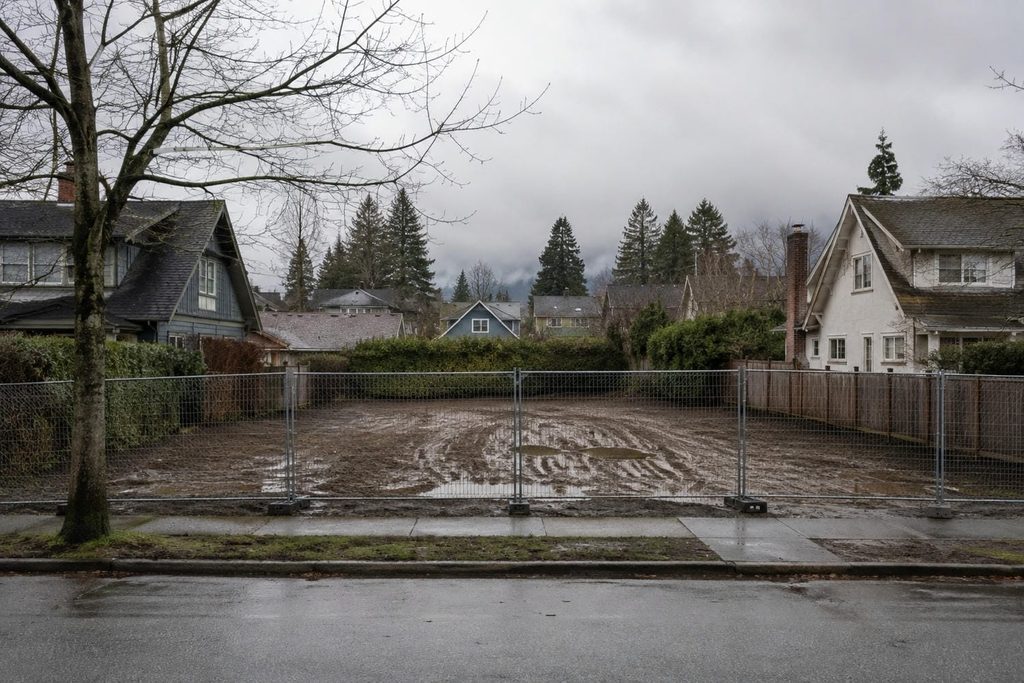
Two different bills sit between the old house and the new one, and only one of them is a holding cost. The first arrives once at building permit issuance, charged on the new house rather than on the demolition. The second is exposure that runs for every day the lot sits empty without a permit in play. Underneath both, the ordinary property tax bill keeps arriving.
The Charge That Arrives With the Building Permit
Development cost charges fund growth-related infrastructure and are applied once, at building permit issuance, rather than accruing while the lot sits. Under the regional charges in effect since 24 July 2026, Metro Vancouver’s charges on a residential lot run from about $17,100 to about $22,900. Water is $10,952 and parkland acquisition $491 everywhere. What moves the total is liquid waste, set by the sewerage area your lot sits in rather than by the city on your address, and the spread across the four areas is worth several thousand dollars. Find out which area applies to your lot before you price the charge. A further set of rates takes effect 1 January 2027. Those are regional charges only, and municipal charges sit on top of them. Whether the house you are removing counts against the charges on the new one is set by your municipality’s own bylaw, so ask before you budget the full amount, because the answer is worth real money.
The Lot Is Still Taxed, and the Vacant Window Has Its Own Taxes
You keep paying property tax on a cleared lot, because the tax is charged on the land as well as on anything standing on it. What comes off is the building half of the assessment, and your own assessment notice already carries the land value and the building value as two separate lines. Timing matters: the assessment reflects the state of the property on 31 October, so a house that comes down in the spring is still in that year’s bill.
Then there is the vacancy exposure, which is the carrying cost almost nobody plans for. Vancouver’s empty homes tax runs at 3% of a property’s assessed taxable value. There are exemptions for redevelopment, and they are conditional. The redevelopment exemption requires that all necessary permits have been issued and that the work is carried out diligently and without unnecessary delay. The vacant land exemption requires that permits have been applied for, are under review, and are being diligently pursued. Any period when the house is empty and the permit has not yet been issued does not count toward the redevelopment exemption. The provincial speculation and vacancy tax has its own land under development exemption.
Planning a Teardown Build in the Lower Mainland
All of this sits in front of the build, on the critical path. The survey, the abatement, the severances, the salvage paperwork and the permit applications are where teardown schedules break, long before framing starts. Run them as one sequenced program and the demolition stops being a milestone you wait for.
Trades are pre-booked against a detailed build schedule, so abatement, severances and demolition do not collide. Our fixed-price contracts hold because the parts that can be priced are priced before anyone signs. And you can see where the permits and the site work stand through structured updates.
Bali Brothers Construction builds luxury custom homes across Vancouver, Richmond, Burnaby, Surrey, New Westminster and the rest of the Lower Mainland. If you are weighing a teardown lot or already hold one, get in touch and we will walk the sequence with you before anything is booked.
Frequently Asked Questions
Do I Need a Building Permit Before I Can Demolish the House?
In Vancouver, yes. The building or development permit has to be in hand before demolition work begins, and where the demolition is part of building a new house the two applications go in together. Surrey does not require it, but recommends applying for both at once if you plan to build within 6 months. Everywhere else, get the sequence from your own city in writing, because it decides your demolition date.
Can I Keep the Garage and Take Only the House Down?
It can change the order of your permits. In Surrey, where the application is to demolish a single family dwelling and an existing accessory building is being kept, a building permit for the new house may be required before the demolition permit is issued. That is worth checking early, because keeping an old garage is a common plan and it can quietly move your demolition date.
What Happens to the Hole Where the Basement Was?
It gets filled, and quickly. In Vancouver, on one and two family dwellings, any excavation left by removing an existing basement and retaining walls has to be backfilled immediately, unless a geotechnical engineer’s services have been retained for the site. So the cleared lot you are picturing is a filled and graded lot, not an open hole waiting for the new foundation.
Does an Older House Automatically Mean Asbestos?
Assume yes until a survey says otherwise. Asbestos was used widely in BC building materials until the early 1990s and cannot be identified by sight. Once a crew is on site the house is a workplace and the survey is the law, and most Lower Mainland cities want the report with the permit application anyway. Abatement contractors must now be licensed in BC.
Can the Old Oil Tank Just Be Left in the Ground?
Almost never on a teardown. A very limited exception exists where the tank sits under a permanent structure, or where taking it out would endanger nearby buildings, and even then it is the fire authority’s decision and the tank still has to be rendered inert. On a lot where the structure above it is coming off anyway, the condition that would justify leaving it usually disappears with the house.
Can My New House Sit Where the Old House Sat?
Usually not. An older house is often allowed to sit where it sits only because it predates the current rules, and that permission belongs to the building. Once the building is gone, the new house is designed to today’s setbacks, height limits and floor area. Treat the old footprint as history rather than as a template for the new design.
Do I Still Pay Tax on the Lot While It Sits Empty?
Yes. The bill keeps coming, because the tax is charged on the land as well as on the building. The part owners trip over is the vacancy exemptions: they are conditional on the work being pursued without unnecessary delay, so a lot that sits while a design is reconsidered can lose an exemption it looked entitled to. The provincial declaration also has to be filed every year, even when an exemption applies.